Essay - Issue 10
Root Access
Sound reaches the brain and body like nothing else
As a baby, Daniel Kish lost both eyes to a rare cancer. No one taught him what came next. Around age two, on his own, he started clicking his tongue and listening to how the sound bounced back off walls, furniture, and parked cars. By six he was riding a bicycle down his street using nothing but those clicks to know what was ahead of him.
Researchers at Western University later scanned his brain while he echolocated and found that the clicks and their echoes were processed in his visual cortex, the same region a sighted brain uses to see. Sound was not standing in for sight. As far as his brain was concerned, it had become sight. Kish went on to become the first totally blind person certified as an orientation and mobility specialist in the United States, and has since taught his click-based technique to more than a thousand blind students across dozens of countries.
Kish calls blindness an "inconvenience", not a tragedy, and his story makes the case this essay is built on: "sound provides direct access to the brain and ingenious use of sound can reroute or stimulate senses that are offline." Given the chance, it can carry almost anything a nervous system needs, all the way down to seeing a bicycle route down a busy street.
Short Story
This essay is the first in a series on the senses, starting with sight, sound, and touch, and how technology built around them can expand independence, potential, and dignity for people with disabilities.
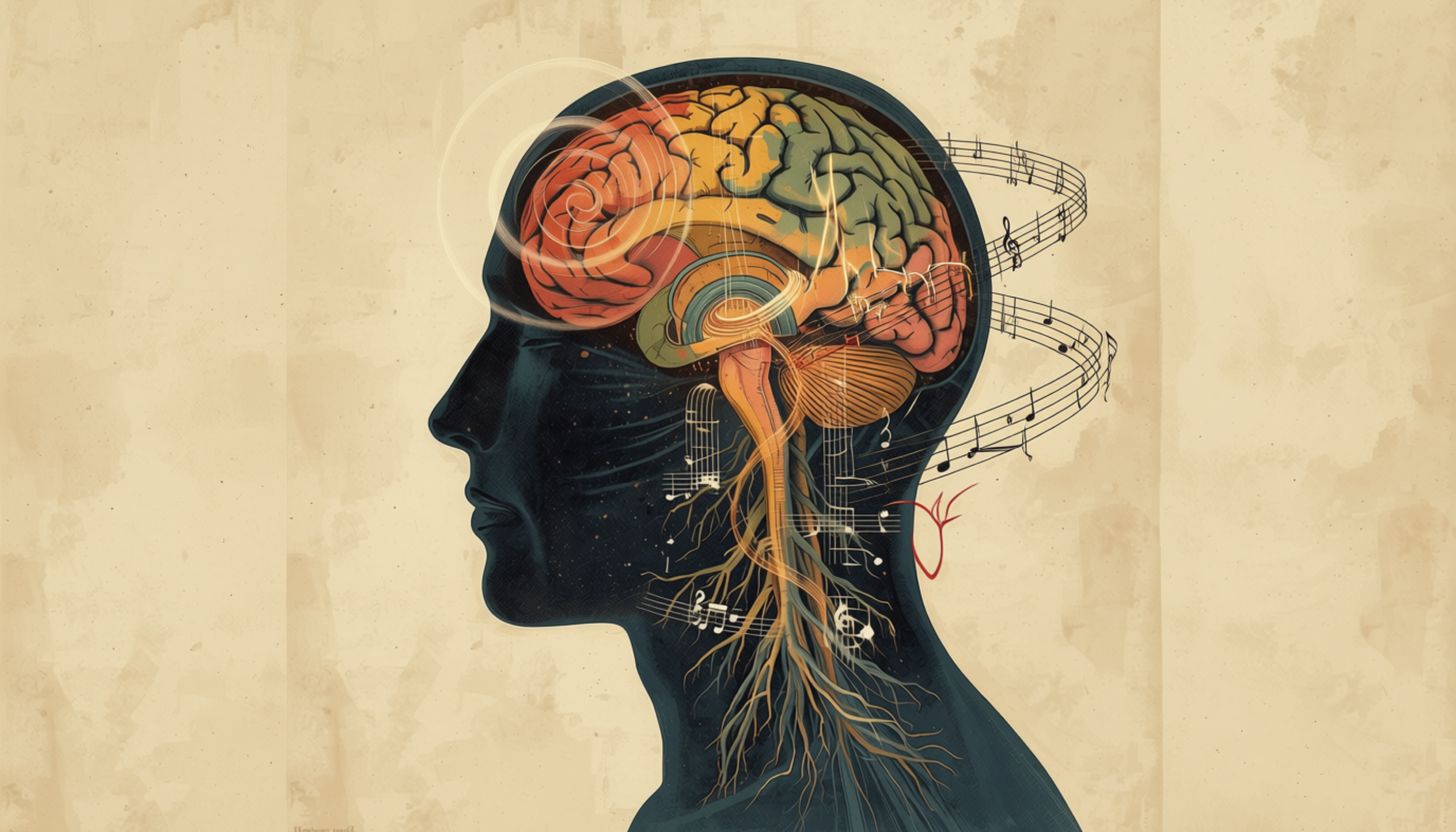
Sound is already helping stroke and Parkinson's patients walk again, calming and orienting neurodivergent minds, screening newborns for hearing loss, catching early signs of autism in an infant's cry, and detecting Parkinson's and depression from a few seconds of speech. Deaf and hard-of-hearing fans are feeling live concerts through vibration. A drummer with a prosthetic arm is playing faster than any human hand. Blind composers are writing sheet music through braille notation software. All of it is published, funded, and in some cases already reimbursed by insurance.
More than 1.5 billion people worldwide live with some degree of hearing loss, and 430 million need hearing rehabilitation today, a number the World Health Organization expects to reach 700 million by 2050. Layer in neurodivergence, aphasia, stroke recovery, and the diagnostic gap for conditions like autism and Parkinson's, and sound is one of the largest underbuilt markets in disability tech.
Additionally, there is an interesting distribution element unique to sound among the senses: the people who make it for a living have enormous audiences, and a musician, actor, or speaker who builds an inclusive show can hand an early-stage company more exposure and credibility in a single night than an investment round could buy.
Long Story
What we mean by the title "Root Access"
Software engineers know that every operating system has a layer of privilege that sits underneath apps and screens, the layer that can touch anything, rewrite anything, reach parts of the system that ordinary programs never see. Developers call it "root access" and at Adaptation Ventures we are fond of saying that "music gives you root access to the brain". Sound, in its most intentional form, moves you from the deepest parts of your brain to smile, cry, laugh, and reminisce. We place profound importance on a baby's first words, a wedding dance, and that song that gets stuck in your head.
Further, the "access" part of "root access" is particularly fitting since disability tech at its core is about giving people equal (or better) access to the world around them. We will explore this more as we continue.
Neuroscientist Daniel Levitin has spent decades scanning brains as people listen to music, and the finding holds up study after study: "music activates more regions of the brain, across more networks, than almost any other stimulus researchers have studied." Oliver Sacks put it more simply in Musicophilia: as many as twenty or thirty distinct parts of the brain get recruited to process one piece of music, including in patients whose other cognitive functions have badly deteriorated. Sound moves through motor, memory, and emotional pathways at once, often before a person consciously registers what they are hearing.
That is why a song can bring back a physical memory years later. It is also why sound-based tools keep showing up in some of the hardest problems in medicine and disability: not because sound is optional, but because it has a more direct line into the nervous system than almost anything else we know how to build a product around.
Where this is already working
The clearest evidence lives in movement. Rhythmic auditory stimulation, or RAS, uses a steady beat, often music, to help the brain retrain a damaged motor system. A meta-analysis of randomized trials found that RAS meaningfully improves gait, mobility, and quality of life in Parkinson's patients, and similar results show up in multiple sclerosis and stroke recovery.
MedRhythms, a Portland, Maine company, turned that research into InTandem, a wearable, prescription-only device that delivers RAS to stroke patients at home. It carries FDA Breakthrough Device status and, in the trial supporting its clearance, improved gait speed by an incredible 22 percent in patients who were, on average, eight and a half years past their stroke. In 2024, the Centers for Medicare and Medicaid Services assigned it a reimbursement code, opening access to 15 million beneficiaries. This is what it looks like when an idea becomes clinical evidence, and earns FDA clearance and payer reimbursement all at once.
Dementia care shows a gentler but still real version of the same pattern. A Cochrane review of music-based interventions in institutional dementia care found that at least five sessions meaningfully reduce depressive symptoms and improve overall behavior, with likely benefits to emotional wellbeing and anxiety, and a 2024 network meta-analysis of randomized trials found consistent cognitive gains across multiple music therapy formats. Families who have watched a parent with advanced Alzheimer's go quiet for a song they loved as a teenager do not need a citation to believe this. It is worth having one anyway.
A newer, more precise version of the same idea tunes the sound to an exact frequency instead of a favorite song. Researchers at MIT's Picower Institute found that 40Hz light flashes and sound clicks, delivered daily, restore a brainwave rhythm called gamma that runs weak in Alzheimer's patients, an approach they call GENUS. In mouse models it cut amyloid plaque buildup by roughly 37 to 53 percent. A 2025 follow-up on five long-term human participants found some late-onset Alzheimer's patients still scoring above national averages on cognitive tests two years in. An MIT spinout is now running a nationwide clinical trial on the approach.
A related approach skips the ears and delivers the wave straight into the body. Vibroacoustic therapy uses a chair or platform that plays low-frequency sound, often in that same 40Hz range, as a vibration a person feels rather than hears. In nursing home settings, structured vibroacoustic sessions have been linked to sharp drops in agitation-related behavior and psychiatric medication use. In a double-blind trial, Parkinson's patients who received 12 weeks of 40Hz vibroacoustic sessions showed real improvements in tremor, rigidity, and gait against a placebo chair, the first controlled study to find a lasting motor benefit from the approach.
Neurodivergence is an emerging frontier, with some mixed results. Reviews of sound-based intervention in autism, including auditory integration training and related methods, report improvement in social communication and auditory processing in a majority of studies, alongside a meaningful minority that find no effect. The evidence is stronger for structured music therapy specifically: a recent meta-analysis found it meaningfully reduces autism symptom severity and improves sensory processing, and a brain-imaging trial found that individualized music therapy increased connectivity between the auditory cortex and the brain's social and motor-processing regions, tracking directly with gains in children's communication skills. Binaural beats research for ADHD is similarly mixed, with some trials showing real gains in sustained attention and a 2025 review calling for more individualized protocols before anyone declares victory. This is an active, funded field that has not yet produced its own InTandem, an opportunity for a founder willing to do the clinical work instead of shipping a wellness app with a claim it cannot support.
Sound as a diagnostic and wayfinding tool
Sound does not only treat. It reveals. Newborn hearing screening works by measuring otoacoustic emissions, the faint sound a healthy inner ear produces in response to a click. Researchers recently built an open-source, smartphone-based version for newborns in settings without dedicated audiology equipment.
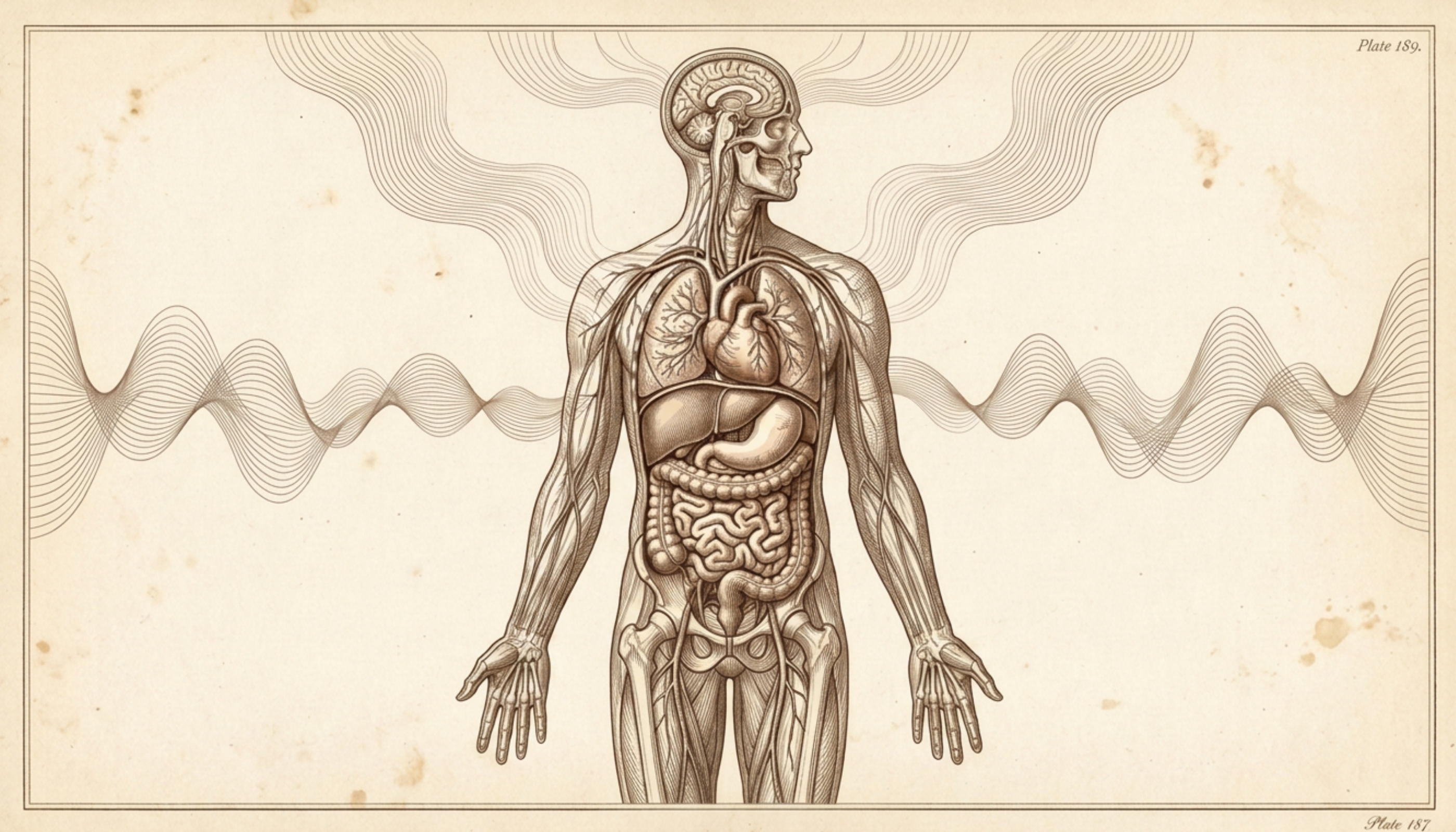
Voice is turning into a diagnostic as well. Machine learning models trained on short speech samples are now detecting Parkinson's disease with strong accuracy in early trials, and similar work is underway for depression. A systematic review found the acoustic properties of an infant's cry can flag early risk for autism spectrum disorder well before a child reaches the age most diagnoses happen.
And sound can substitute for sight entirely, as the opening story about echolocation shows. Blind adults reading Braille show activation in the primary visual cortex, the same region a sighted brain uses to see, a finding researchers at the National Institutes of Health first documented in 1996 and have replicated many times since. The brain appears to process spatial and symbolic information wherever it comes from, using whichever pathway is available.
Even sound waves themselves are becoming a treatment. Focused ultrasound received FDA approval in 2016 for essential tremor and is now being studied for Parkinson's tremor, epilepsy, and neuropathic pain, using sound waves to make precise treatments deep in the brain without opening the skull.
Feeling music without hearing it
The medical context above allows us to explore how innovation in sound intersects with everyday life. For a large share of the Deaf and hard-of-hearing community, the goal is a way into the shared experience of music that does not run through the ear at all. We're not looking for a simulation of hearing, but a rerouting of the senses in order to give equal access.
Music: Not Impossible, born out of Not Impossible Labs, built a vest, wrist bands, and ankle bands that translate a live mix into vibration across 24 points on the body, and in the words of its own team, "ended up building a better music experience for everyone". Tactus builds the same technology into jackets and vests that look like ordinary streetwear rather than medical equipment.
Touring artists are already the distribution channel for this category. Coldplay outfits every stop of their tour with SUBPACs, sign language interpreters, sensory bags, and touch tours for blind guests, in partnership with the nonprofit KultureCity – proof that one credible artist can do more for a hardware company than any ad campaign.
Playing and reading music regardless of body or sight
Jason Barnes lost his right forearm in an electrical accident and, working with Georgia Tech roboticist Gil Weinberg, built a prosthetic drumming arm pairing an EMG-controlled stick with a second, AI-driven stick that listens and improvises its own beat, together playing faster than a human hand at up to 20 hits per second.
Blind and low-vision musicians face a quieter barrier: most composition software assumes a screen and a set of eyes. SoundCells, developed through NYU research, gives blind composers a browser-based way to write and notate music directly, without a separate braille transcription step. In 2026, MuseScore added native braille composition, folding a once slow, separate process into one workflow.
Dame Evelyn Glennie, profoundly deaf since childhood and one of the most recorded percussionists alive, has spent her career making the point that hearing is not confined to the ears. "Basically, it's about the vibration," she has said, describing how she feels sound through her hands, chest, and whole body, and teaches other musicians to listen the same way. Her career argues the barrier was always in the instrument and the room, not in her.
Why sound and connection matter to a healthy human life
None of this works as a venture capital thesis if sound were only a medical intervention. It works because sound is one of the oldest tools humans have for connecting one nervous system to another.
Every documented human culture makes music, and cross-cultural listeners can pick up on basic emotional intent in music from societies they have never encountered, a pattern researchers have traced across thousands of songs from more than 300 societies. Later work complicates the idea that music carries identical meaning everywhere; listeners in different cultures can hear the same piece and describe different scenes. What survives is more interesting: the structures of music, rhythm, repetition, tension and release, appear to be human universals even when the stories built on top of them are not.
Recently, the U.S. Surgeon General said we are in a "loneliness epidemic". In this context, music can create a bonding effect that has a physical mechanism behind it, not only a poetic one. Researchers studying group music-making point to interpersonal synchrony, the tendency of people moving or singing to the same beat to feel less separate from each other, and the release of endorphins during coordinated activity like singing, dancing, or drumming. Levitin's own lab has found that groups listening to the same music, even without moving, show measurably synchronized brainwaves, and in live settings, a joint release of oxytocin, the hormone most tied to trust and bonding.
Sound regulates the body and connects people to each other, mechanisms as basic as any we know. A poorly designed venue, an app that was never tested with a screen reader, or a hearing aid that nobody can afford does more than inconvenience someone – it removes access to one of the more basic tools people have for feeling steady and connected.
The curb cut effect
We have written before about the curb cut effect: solve a real problem for people who need it most, and the solution often ends up serving almost everyone. Sound gives us two perspectives to consider.
The first is the constraint itself. Music: Not Impossible has said outright that solving the problem for Deaf and hard-of-hearing fans required a more precise, more immersive experience than anything designed for hearing audiences alone, because there was no shortcut available. The same logic runs through RAS: a therapy precise enough to retrain a damaged nervous system also works for otherwise healthy older adults trying to walk more safely. When the beachhead user has no room for a mediocre version of a product, nobody else ends up with one either.
The second reason is unique to this sense. Musicians reach audiences that most technology companies spend years and fortunes trying to build, and a touring artist who adopts a haptic wearable or features a prosthetic musician on stage hands that company distribution and credibility no marketing budget can buy. The audience is already there: as many as one in four fans identify as Deaf or disabled, or close to someone who is. If that fan can attend and enjoy the experience, it enables their family, friends, and supporters all to have the opportunity to participate – rather than stay at home in solidarity.
The irony lands even closer to home for the artists themselves. A recent global meta-analysis found that 42.6 percent of musicians report tinnitus and 25.7 percent report hearing loss, both roughly double the rate found in the general population, a direct cost of careers spent standing next to amplifiers for a living. The people who built their lives on sound are frequently among the first to feel a piece of it slip. That is not a reason for pity. It is a reason for urgency. The audience for sensory access technology is not a demographic projection sitting somewhere in the future, it already includes a meaningful share of the people currently on stage, and a much larger share of the people who have been buying tickets to see them.
What we want to see
Founders working in this space have the potential to create world changing companies. We are particularly encouraged by:
- Haptic and tactile systems that translate live sound and music with enough precision that Deaf and hard-of-hearing users describe the experience as richer, not simplified.
- Sound-based orientation and regulation tools for neurodivergent users built on individualized, tested protocols rather than a generic playlist with a wellness label on it.
- Rhythm and entertainment-based solutions with a clinical trial behind them and a real path to FDA clearance and reimbursement, following the same path MedRhythms has already proven out.
- Adaptive and assistive instruments for musicians with limb difference, paralysis, or motor conditions, built with the same ambition Jason Barnes and Gil Weinberg brought to a drumming arm that outperforms an unmodified hand. Allstrum is an example of this.
- Accessible composition and notation tools that let blind and low-vision musicians write, read, and share music without a separate, slower transcription pipeline.
- Affordable, scalable diagnostic tools that use voice, cry, or otoacoustic signals to screen for autism, Parkinson's, depression, or hearing loss outside a specialist's office, particularly where none is nearby.
If you are building in any of these areas, we want to hear about it. Pun intended.
Why this fits our thesis
Adaptation Ventures exists because we think the businesses that will matter most over the next decade are the ones solving the most concentrated, most urgent human problems first. Sound fits that idea in a way few other categories do. It touches movement, memory, diagnosis, and connection all at once, and it comes with an audience of artists whose reach can carry a good idea further and faster than with venture capital alone.
We started with sound because the research is deep, the products are real, and the people making the case loudest are often the ones who have lived it, whether that is a percussionist who has been deaf since childhood, a drummer with a prosthetic arm, or a toddler who taught himself to navigate a city block by the echo of his own clicks. Sight and touch are next.
Thank you for being part of the Adaptation Ventures journey.
Best, The Adaptation Ventures Team
This journal is for informational purposes only, is not a prospectus, may not be relied on as legal, tax, securities or investment advice and does not constitute an offer to buy or sell interests in Adaptation Ventures Fund I (the "Fund").
Related links shown on page: No explicitly labeled "related essays" module was returned by the fetch; the page's nav includes a link back to https://adaptation.vc/journal/ and an inline reference to /insights/issue-06-curb-cut-effect (Curb Cut Effect). Recommend a manual check of the live page footer for a "related posts" widget that the extraction may have missed.