
Newsletter - Issue 13
September 2026 Newsletter
Exoskeleton clears the FDA, Talkspace acquired for $835M, Meta donates enough glasses to cover Ireland's entire blind population
August moved a bit slower than July, but was no less impactful. Wandercraft got the clearance it needed for Eve, the first personal exoskeleton built to leave the clinic, and set a commercial launch date for later this month. Meta gave away 15,000 pairs of its AI glasses in Ireland, enough to cover every blind adult the country's leading charity supports. Talkspace was acquired for $835M. And a Wisconsin judge kept a years-long fight over paper ballots moving for voters who cannot vote without assistance.
Our Value Proposition
Adaptation Ventures maximizes human independence and potential by investing in next-generation disability, neurodivergence, caregiving, and diagnostic tech companies that serve 2B people with $18 trillion in spending power.
- 2 billion people globally live with disabilities; nearly everyone will eventually use adaptive technology
- $18 trillion in annual spending power is concentrated among people with disabilities and their families, and they show 3x the customer loyalty of the average buyer
- 9x ROI for every dollar invested in assistive technology as people gain independence and potential, engage in activities, excel at work, raise families, and more.
Don't Miss This: Wandercraft's Eve Clears the FDA
Wandercraft's Eve is now cleared by the FDA for daily use by wheelchair users with spinal cord injuries at any level. It is the first self-balancing personal exoskeleton built for use outside a clinic. Most devices in this category live in rehab centers, worn under supervision and taken off at the end of a session. Eve is meant for the sidewalk and the kitchen, with a trained companion nearby instead of a therapist. Commercial sales start September 17, and Medicare is expected to start paying within 60 to 90 days of that date, which would be quick for a device this new.
Eve won't be alone for long. Reudyn's Hip X26, a hip-assist exoskeleton aimed at workers in physically demanding jobs rather than people with permanent mobility loss, is set to launch the same month. The two devices are chasing different buyers, one clinical and one closer to industrial safety gear, but both are betting that a category built around occasional clinic use has room for something people wear all day. We'll be watching what happens to Eve once it leaves FDA clearance and enters the coding and coverage fight that has stalled other good hardware in this space.
Funding Rounds: BCI Still Takes Most of the Money
Brain-computer interface companies pulled in roughly $2.06 billion through the first half of 2026, and the money keeps concentrating rather than spreading out. Eight rounds above $50 million account for close to 90% of that total. Strip those out and the rest of the category raised about $212 million combined, according to Neurotech Reports and NeuroFounders. Five companies, Neuralink, Science Corporation, BrainCo, Merge Labs, and Synchron, have taken in four of every five disclosed dollars in the category over the past two years. If your company isn't one of those five, you're fighting over a small slice.
A few August rounds worth knowing:
- AmeriHealth Caritas made a strategic investment in Deon Health on August 21, a Michigan-based managed care organization built for people with intellectual and developmental disabilities. Town Hall Ventures, First Trust Capital Partners, and Difference Partners joined the round. I/DD-managed care rarely draws serious payer capital, so a health plan backing one directly is worth a second look. Congratulations to our friends at Difference Partners!
- BlueWind Medical got FDA clearance on August 5 for Revi Extend, an implantable nerve stimulator for urgency urinary incontinence that now runs 15 years on a single battery, up from 10. It won't make headlines, but a longer battery life changes the calculus on whether an implant makes sense for someone managing a lifelong condition.
- SoundHealth raised a $12.25 million Series A for AI-driven, non-invasive devices for breathing and sleep disorders, a category that gets treated as a comfort issue more often than the disability it actually is for a lot of chronically ill and neurodivergent people.
M&A and Exits: Talkspace Changes Hands
Talkspace's run as a standalone public company ended August 17, when Universal Health Services closed its roughly $835 million acquisition of the company. UHS becomes majority owner, folded into one of the country's largest behavioral health providers.
Hinge Health paid $105 million in cash for Cylinder Health on August 4, pushing into gastrointestinal care. Musculoskeletal conditions are already the leading cause of disability among working-age Americans, and digital health companies built around one condition keep buying their way into adjacent ones instead of building from scratch.
Big Tech and Accessibility: Meta Covers Ireland, iOS 27 Gets a Release Date
So… Meta covered an entire country. On August 12, the company said it would give 15,000 pairs of Ray-Ban Meta glasses to Vision Ireland, enough for every blind adult the charity supports. The rollout happens in phases: an application, an in-person assessment, training, then a helpdesk people can call when something goes wrong. It's the largest accessibility hardware giveaway we know of, and it lands a month after Meta tested a paid tier for one of the same accessibility features, then paused it once users pushed back. Free hardware with paid software layered on top is a real business model. If Meta sticks with it, that may reset what founders building blind-navigation software can charge for a standalone app.
iOS 27 has a release date now. Apple is expected to release around September 14, timed to the iPhone 18 launch. That means Live Recognition, the on-device camera narration feature, and the Personal Voice framework other developers can build on, both of which we flagged when they showed up in beta last month, move from testers to everyone with a compatible phone. Free OS-level accessibility tends to set a ceiling on what people will pay for the paid alternative, so this is worth watching if you're backing a blind-navigation or voice-banking company.
Disability on the Public Stage
While this month was light on innovation and investment (August usually is) the policy train keeps on chugging:
- Wisconsin's absentee ballot fight isn't over, but the goalposts have moved. On August 5, Dane County Circuit Judge Everett Mitchell ruled again that the state's paper-only absentee system denies voters with print disabilities an equal, private way to vote, building on a 2024 order that would let voters who cannot mark a paper ballot alone request an electronic one. He stopped short of ordering the state to roll out electronic voting right away. A hearing on August 12 was set to pick a trial date, but insiders don't expect movement before the November election. An appeals court has already reversed Mitchell once on a related injunction, so this is likely headed back up. There's a real market underneath this fight for accessible remote-ballot software that can clear the audit and security bar states will demand, and litigation like this tends to open procurement conversations faster than usual.
- The Fourth Circuit narrowed what counts as a reasonable accommodation. In Dieng v. Orkin, decided August 7, the court reversed a lower ruling that let Orkin put an injured pest control technician on indefinite unpaid leave and call that accommodation enough. The panel called the arrangement "professional purgatory" and found Orkin never seriously discussed moving him into a lighter-duty role the company actually had open. For a permanent condition, unpaid leave alone is no longer a safe answer on its own, and employers now have to show that they engaged in good faith about reassignment. Employers carry more legal exposure here, which is good news if you sell software that tracks or manages accommodations.
- A federal court in Virginia found the Air Force built a screening process without the authority to do so. In Watts v. Meink, the court ruled the Air Force's internal prescreening diverted sick and injured service members away from the Integrated Disability Evaluation System Congress set up for them, cutting off access to medical board review, military counsel, and a formal hearing. The court called the process "arbitrary, capricious, contrary to law," certified a class, and the parties are now briefing what remedies should look like. Watch for the same pattern elsewhere: agencies quietly building informal "pre-checks" that push people out of a process the law already requires. Stay vigilant.
- The Department of Transportation pushed its own deadline back again. On August 14, DOT extended enforcement discretion on several 2024 wheelchair-rule protections, including airline liability for damaged chairs and how often flight attendants get trained, out to April 30, 2027. The rule was supposed to be in force by January 2025. A rewrite the department is calling Wheelchair Rule II is reportedly coming, though we have no indication on timelines. Each delay pushes back the compliance roadmap for any company selling into this rule.
The Olmstead fight we told you about last month kept moving through the states in August, mostly out of public view. Disability rights groups are already tracking which states are testing what non-enforcement looks like in practice. If you have portfolio companies exposed to Medicaid home and community-based services waivers, this is a good month to have counsel read state renewal language.
From the Archives: SMA Awareness Month and 504 in Denver
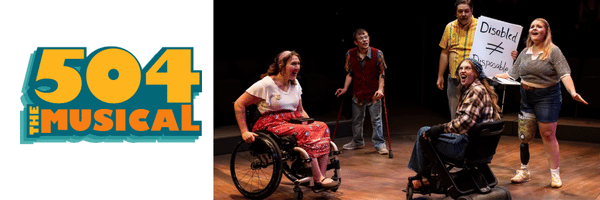
August was spinal muscular atrophy (SMA) Awareness Month. Cure SMA held its annual candle lighting on August 8, an event built more around visibility than fundraising, and kept up its usual push to reach lawmakers while Congress is out of session and members are home in their districts. SMA remains one of the few rare-disease categories where a real treatment now exists. The open question is how many families can actually get to it.
In Denver, Phamaly Theatre Company staged "504: The Musical" from August 6 through 23, telling the story of the 1977 San Francisco sit-in that forced the federal government to finally write enforceable regulations for Section 504 of the Rehabilitation Act. Given what's happening with Olmstead this year, the timing wasn't lost on anyone in the audience.
Mind Over Matter: Thomas Edison
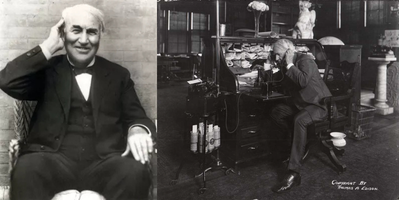
Thomas Edison was profoundly deaf since the age of 12.
Last month we told you about Charles Steinmetz tapping Morse code on Thomas Edison's knee in 1922, in Steinmetz's small workshop in Schenectady. This month, we offer the other half of that conversation.
Edison, the inventor of the lightbulb, lost most of his hearing by age 12, and he told at least three different origin stories. In one, a conductor grabbed him by the ears to pull him onto a moving train, and, in his words, something snapped inside his head. In another, the same conductor boxed his ears after a fire broke out in the boxcar lab a teenage Edison kept while selling newspapers on the Grand Trunk Railway. Late in life he admitted to friends that neither story was true. Classic genius humor. Paul Israel, who runs the Edison Papers project at Rutgers, points instead to a childhood bout of scarlet fever and years of untreated ear infections. Later, ear surgeons proposed otosclerosis or cholesteatoma. Nobody knows for certain, including, it turned out, Edison himself.
What he did know was what to do with it. He told his biographers his deafness made him a sharper telegraph operator, because he could hear the instrument in front of him and tune out the ones down the line that distracted other operators. Building the telephone, he had to get the transmitter loud and clear enough for his own ears before he trusted it worked, and that version is what made Bell's receiver useful to anyone. He built roughly 250 devices around sound over his lifetime, testing each one against a sense that kept fading. In a 1925 interview with Cosmopolitan, he put it plainly: his deafness was "not a handicap, but a help," because it spared him small talk and, in his words, "all the meaningless sound that normal people hear."
It shaped his marriage too. He proposed to his second wife, Mina Miller, by tapping Morse code into her hand, and she learned the code so the two of them could talk across a crowded room without anyone else following along. Their children picked up the habit: his daughter Marion went by "Dot," his son Thomas by "Dash."
So when Steinmetz tapped out a conversation on Edison's knee in 1922, it wasn't a trick built for the occasion. Edison had been having his most private conversations that way for close to forty years, with someone who had learned his language on his own terms, and neither man treated it as unusual. They built what they needed and got on with it. Entrepreneurship in action.
Looking Ahead to September
September is stacked. Wandercraft's Eve goes on sale September 17, the same week Apple is expected to ship iOS 27 with its accessibility features finally in production. Here's what else is on the calendar:
September events we're watching:
- September 9 (Harrisburg, PA): Inglis's Opening Doors Together conference, on accessible and adaptive housing
- September 16-17 (Las Vegas, NV): ATIA's AT Summit at the Rio in Las Vegas, the assistive-technology industry's main gathering
- September 18 (Dublin, OH): TechSummit 2026 at Ohio State's Nisonger Center, on technology for people with developmental disabilities
- September 23-26 (Düsseldorf, Germany): REHACARE, the largest rehabilitation and inclusion trade fair in the world
- October 1 (New York, NY): The National Organization on Disability's Technology and the Disability Experience event in New York, just past the month but worth marking down now
Thank you for being a part of the Adaptation Ventures journey.
Best, The Adaptation Ventures Team
This journal is for informational purposes only, is not a prospectus, may not be relied on as legal, tax, securities or investment advice and does not constitute an offer to buy or sell interests in Adaptation Ventures Fund I (the "Fund").