
Newsletter - Issue 15
October 2026 Newsletter
Meta donates AI glasses to every blind U.S. veteran, BCI raises $250M, Hanger and Numotion combine, Adaptation at the UN General Assembly
September was a big month for Meta in our corner of the market. The company spent the month handing out free AI glasses to blind veterans at VFW posts and blindness agencies across the U.S. and at events across Ireland. Then it used its Connect conference to open the glasses to outside developers and announce an FDA-cleared hearing feature. Precision Neuroscience raised $250M for its brain-computer interface, and Fortell raised $163M for AI hearing aids. Hanger agreed to buy Numotion, which brings prosthetics, orthotics, and complex wheelchairs under one owner. On the policy side, a federal court in Texas removed the community integration language from the 2024 Section 504 rules for the entire country. We also spent UN General Assembly week in New York talking about disability with family offices, scientists, and a room full of students and clinicians.
Our Value Proposition
Adaptation Ventures maximizes human independence and potential by investing in next-generation disability, neurodivergence, caregiving and diagnostic tech companies that serve 2B people with $18 trillion in spending power.
- 2 billion people globally live with disabilities; nearly everyone will eventually use adaptive technology
- $18 trillion in annual spending power is concentrated among people with disabilities and their families, and they show 3x the customer loyalty of the average buyer
- 9x ROI for every dollar invested in assistive technology as people gain independence and potential, engage in activities, excel at work, raise families and more.
Story of the Month: Meta Donates Distribution
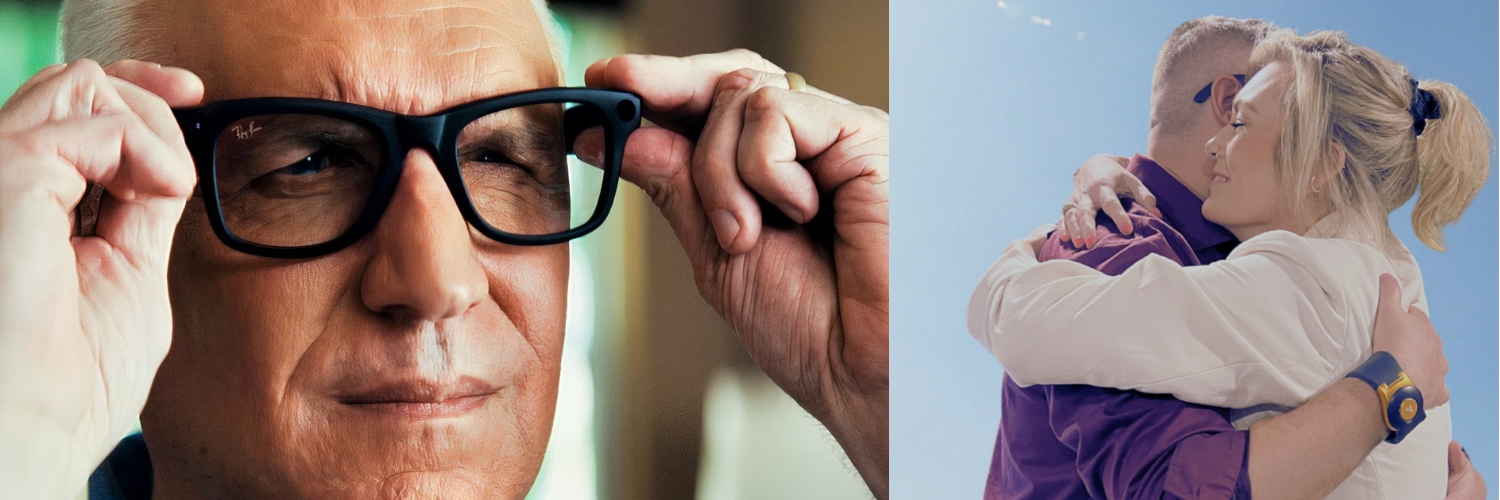
In June, Meta said it would give a pair of Ray-Ban Meta glasses to every legally blind veteran in the United States, about 130,000 people. The Blinded Veterans Association (BVA) designed the training, and the American Council of the Blind, Lighthouse Guild, TechSoup, Tunnel to Towers, and several other groups signed on to help. Army veteran Don Overton, who lost his sight in a bunker explosion during Desert Storm, inspired the program. His line from the announcement: "The moment I put on my Ray-Ban Meta glasses, I got my independence back."
September is when the promise turned into reality. Meta President Dina Powell McCormick led a distribution at VFW Post 8787 in Austin on September 11, where Chris Stapleton joined her. The Cincinnati Association for the Blind and Visually Impaired hosted another on September 16, and Houston followed on the 23rd, with more stops scheduled into October (BVA). Veterans join BVA and request a pair online, and BVA says demand has created a waitlist (BVA). In Ireland, Vision Ireland began giving out the 15,000 pairs Meta donated in August, through more than 40 gifting events in seven cities (Westmeath Independent). By the Cork event on September 23, over 2,000 people had registered (Cork Independent).
Then came Meta Connect. Meta released version 1.0 of its Wearables Device Access Toolkit, which lets developers extend an existing phone app to the glasses and use the camera, voice, and motion sensors. It also said a curated section for glasses apps is coming soon to the Meta AI app. And it announced FDA-cleared hearing enhancement software for adults with perceived mild to moderate hearing loss, a $149.99 add-on for supported glasses, HSA and FSA eligible, launching in the U.S. later this year.
Why would Meta do this?
Meta's stated reason is honoring veterans' service, and we take that at face value. Here is our read on why it also makes business sense.
Blind and low-vision people are the clearest daily use case for camera glasses. Someone who reads their mail, checks a pill bottle, or finds the right bus through the glasses wears them from morning to night and can tell you exactly what works and what doesn't. That is better product feedback than Meta could buy from a focus group, and it comes from people who depend on the device.
The partners matter as much as the hardware. BVA and Vision Ireland bring trained instructors, local relationships, and the trust of the people they serve. Meta would struggle to build that on its own, and it now has it in two countries.
The goodwill has value too, and the timing is worth noting. On September 1, Meta disabled the cameras on thousands of glasses after people tampered with the recording light and used them to film others without consent (Semafor). Mother Jones ran a piece in September asking whether Meta is using disabled people to promote its glasses. The product also has limits. An American Foundation for the Blind review found the glasses fairly quick but not accurate enough for street crossings and no substitute for a white cane. We think the glasses help people and the program helps Meta, and founders building on the platform should keep both in mind.
What this means for HapWare
This story matters to us because of HapWare, one of our portfolio companies. HapWare's ALEYE is a wristband that pairs with Ray-Ban Meta glasses. The glasses read facial expressions, gestures, and body language, and ALEYE turns them into vibration patterns on the wrist. People who are blind, low vision, deaf-blind or neurodivergent can follow the part of a conversation most of us take in without thinking.
Ask any hardware founder where the money goes and most of it isn't the product. It's getting the device to the right person, teaching them to use it, and picking up the phone when questions arise. Meta is now paying for all three for about 145,000 blind people in two countries, through organizations those people already trust. It is also giving developers an official toolkit and, soon, a place to be found.
That changes things. A veteran who owns Meta glasses, has been trained on them by BVA, and wears them every day only needs to be convinced of one thing: ALEYE adds something the glasses can't do alone. HapWare doesn't have to sell the glasses, teach the basics, or staff a help line for a device it didn't make. It can spend its money on the part only it builds.
The same pattern shows up well beyond glasses. When a large company pays for the base layer, whether that's an operating system, a device, or a distribution program, startups get a cheaper path to customers. The price is dependence. Meta hasn't said how apps will get into its new directory, how they'll rank, or whether Meta will take a cut. As we wrote last month, free hardware with paid software on top can also cap what people will pay for a standalone app. Our advice to companies building on the glasses is to own the customer relationship, keep the product working across more than one device where possible, and assume the terms will change.
Funding Rounds: Precision Raises $250M, and Hearing Gets a Big Check
Precision Neuroscience closed an oversubscribed $250 million Series D on September 24, led by Pershing Square, the Ackman Oxman Institute, and an unnamed life sciences fund. The company has now raised $430 million. Its interface sits on the surface of the brain without damaging tissue, and it reports more than 100 patient procedures across 18 institutions. Last month we wrote about how a handful of BCI companies take most of the money in the category. This round widens that gap.
The other big check went to hearing. Fortell, which builds AI hearing aids, announced $163 million from investors including Founders Fund and Thrive Capital. Put that next to Meta's hearing feature and the consolidation in the M&A section below, and hearing had a big September.
A few more September rounds worth knowing:
- ReEmerge came out of stealth with an oversubscribed $37 million Series A co-led by U.S. Venture Partners and Santé. It is developing a therapy aimed at the central thalamus to restore attention and executive function for people living with cognitive impairment years after a moderate or severe traumatic brain injury, and it plans a study of up to 40 patients. Rehab usually ends long before recovery does, and ReEmerge is betting there is more to recover. That idea runs straight through our Nine Years essay.
- Hi Rasmus, a clinical platform for autism and ABA providers covering data collection, scheduling, and outcomes, took its first outside money: a $50 million minority investment from Updata Partners. It had grown to more than 1,000 organizations in 90 countries on its own revenue.
- Prosper Health raised about $10 million, disclosed in an SEC filing, for virtual diagnosis and therapy for autistic adults. Most of the autism money we see goes to children, so a company built for adults stands out.
- Voxela closed a Series A led by Delight Ventures, bringing total funding to about $13.2 million. Its software watches video from standard cameras in long-term care facilities and drafts incident reports, which gives staff time back for residents.
- Strolll, a UK company using augmented reality glasses for Parkinson's and stroke rehab at home, secured €5 million from Innovate UK plus an equity round led by IW Capital, with Cleveland Clinic participating.
- Phosphoenix, an Amsterdam startup developing a brain implant to restore some vision for people who are profoundly blind, raised €1.3 million led by ROM InWest.
- Wandercraft is reportedly raising about €100 million at a €750 million valuation, according to Bloomberg, with Goldman Sachs advising. More on Wandercraft below.
M&A and Exits: Mobility, Home Care, and Benefits Access Change Hands
Hanger agreed on September 10 to acquire Numotion in an all-cash deal from AEA Investors and LLR Partners, forming Hanger Numotion (Hanger). Hanger runs about 925 orthotics and prosthetics clinics, and Numotion runs more than 200 complex rehab and wheelchair locations. Together they'll serve more than 1.5 million patients a year across the U.S. and Canada under Patient Square Capital, with Numotion's Mike Swinford as CEO. The deal is expected to close in the fourth quarter. For a person who uses both a prosthesis and a power chair, one provider could mean fewer handoffs and fewer intake forms. For startups selling mobility hardware through these channels, it means one fewer independent buyer and a lot more negotiating power on the other side of the table.
Addus HomeCare agreed to buy AccentCare's personal care division for about $275 million. The unit serves about 13,700 people a day across 10 states. Personal care means help with bathing, dressing, and meals at home, and it runs mostly on Medicaid. Addus made this bet knowing Medicaid work requirements start in January and the federal government is backing away from Olmstead enforcement. We read that as confidence states will keep paying for home care because it costs far less than the alternative (more on those numbers below).
Centauri Health Solutions acquired Benny the Benefits Navigator on September 15. Benny built an AI tool that walks people through SSI and SSDI applications in plain conversation instead of dozens of pages of forms, and Centauri will fold it into its disability eligibility work. Congratulations to our friends at Difference Partners, who were early investors in Benny.
A few more:
- Allyant acquired Braille Works on September 14. Braille Works has produced braille, large print, audio, and accessible documents since 1994, and the deal more than doubles Allyant's capacity for those formats.
- Apple bought Sonera Magnetics, a Berkeley startup building non-invasive sensors that read magnetic signals from the brain and muscles. The deal came to light September 8 through a European filing. Apple doesn't explain its acquisitions, but a company working on reading nerve signals without surgery is worth keeping an eye on.
- Hearing kept consolidating. Amplifon's board called a shareholder meeting to approve the stock portion of its roughly €2.3 billion GN Hearing acquisition, and Sonova bought Høreservice Danmark, which runs 25 mobile hearing clinics.
Big Tech and Accessibility: iOS 27 Ships, and the Free Baseline Keeps Rising
iOS 27 went out on September 14. The accessibility features we followed through the summer betas are now on every compatible iPhone, including richer VoiceOver descriptions of images, automatic subtitles with translation, new Magnifier tools, Accessibility Reader, and Voice Control updates (The Mac Observer).
At its September 9 event, Apple also announced Sound Recognition for Apple Watch as part of a set of Audio Intelligence features. The watch listens for important sounds around you and alerts people who are hard of hearing. Apple's own pages disagree on whether it's available now or later this year, so we'll confirm when we know more.
Google's September Android update announced Guided Vision, which uses Gemini Live and the phone's camera to describe what's in front of you. It's coming soon to Android 9 and newer, wherever Gemini is available.
Add Meta's glasses and hearing feature to that list. Apple, Google, and Meta now all offer some version of free AI description of the world on the devices people already carry. That's good news for the people who use them. For founders, the free baseline rises every few months. A general tool that works for most people most of the time leaves a lot of specific jobs undone, and it also gives startups like HapWare a global distribution to innovate on.
Disability on the Public Stage
- The biggest disability law story of the month came out of Texas. On September 23, a federal court entered an order in Texas v. Kennedy, agreed to by the Justice Department on behalf of HHS and five states (Texas, Alaska, Florida, Louisiana, and Montana). The order strikes the community integration section of the 2024 Section 504 rules, including the definition of "most integrated setting," and DREDF notes it applies nationwide, not only in the states that sued. The rest of the 2024 rule stays in place, and Section 504, the ADA, and the Olmstead decision remain law. What's gone is the regulatory language telling federally funded programs how to serve people in their communities. National disability organizations condemned the result the next day.
- Governors pushed back on the Olmstead rollback. In a September 3 letter released by New York Governor Kathy Hochul's office, 18 governors, including our own Ned Lamont here in Connecticut, asked Attorney General Todd Blanche not to weaken ADA and Olmstead protections. They warned the change could send more people into institutions who don't need to be there.
- The National Council on Disability, the independent federal agency that advises the President and Congress, wrote to the Justice Department on September 4 warning that the June Office of Legal Counsel opinion could undo decades of community integration policy. The letter cites Medicaid spending of about $17,298 per person a year for home and community-based services, against $54,462 in an institution. Every company building tools to help people live at home should have those two numbers in its pitch deck.
- Social Security published SSR 26-2p on September 1. Starting October 1, it replaces 2011 guidance on how disability claims are evaluated for young adults, roughly ages 18 to 25. The key change for families: SSA says it will not treat reaching an IEP goal as proof a young adult can work without first asking whether supports like extra help, accommodations, or a structured classroom made that progress possible.
- Medicaid work requirements from last year's reconciliation bill take effect January 1, and concern is growing that people with disabilities will lose coverage in the paperwork. George Washington University's HCBS Impacts Tracker follows the effect on home care state by state and updates every two weeks. If your company depends on HCBS waivers, bookmark it.
- In Europe, the standard companies use to show they meet the European Accessibility Act was updated on September 2 and now lines up with WCAG 2.2 AA. U.S. software companies selling into the EU should check their audits against the new version.
Also Worth Knowing
Wandercraft's Eve went on sale in the U.S. on September 17, right on schedule after last month's FDA clearance. National Seating & Mobility is the exclusive complex rehab distributor with more than 180 locations, USVetServ handles orders through the VA, and Wandercraft says qualifying users may be covered by Medicare under an existing personal exoskeleton code, the VA, or workers' compensation. Wandercraft hasn't published a price. The next thing we're watching for is the first Medicare payment.
Neuralink shared video from its VOICE trial showing Kenneth Shock, a participant living with ALS who received his implant in January, producing audible speech from his neural signals. His first words went to his wife: "I love you" (TeslaNorth).
From the Journal: Nine Years
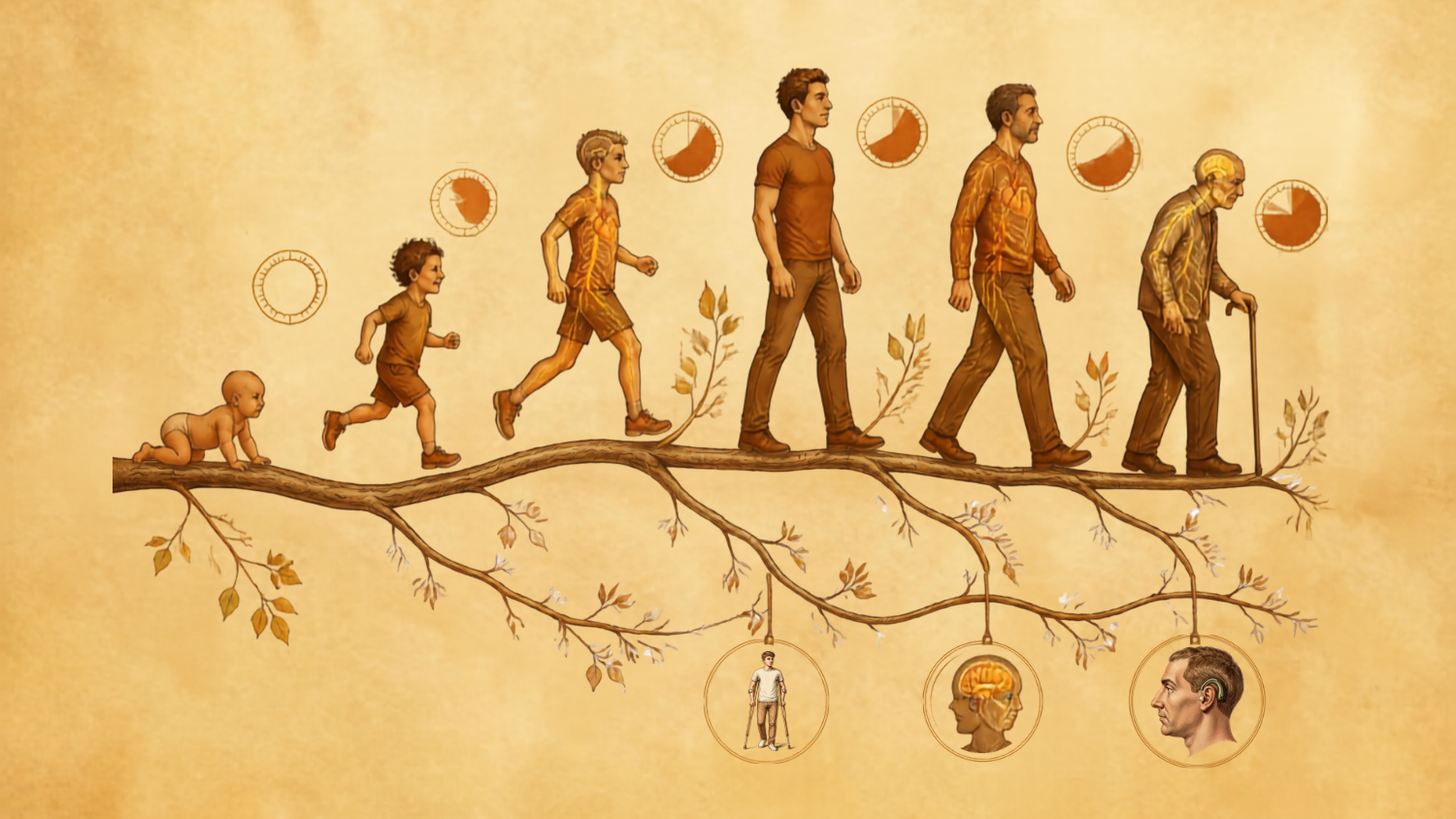
On September 7 we published Nine Years, our essay on longevity and disability. The title comes from the gap between how long people live and how long they live in good health: 9.6 years worldwide and 12.4 years in the U.S., the widest of any country studied.
The essay opens on a stationary bike. Adaptation Ventures Managing Partner Rich Palmer was in the middle of an interval workout, the kind meant to add years to your life, when a brain aneurysm ruptured. He went through open brain surgery and then relearned how to walk, talk and read. One afternoon he wasn't part of the disability community, and a few minutes later he was.
From there, the argument is about money. Family offices and wealthy families are spending heavily on longevity, and the major longevity investor conferences have almost nothing on their agendas about disability, caregiving, or what happens when the added years come with a body or mind that works differently. Money can buy excellent care. It can't buy back lost function. We make the case for disability tech, caregiving and diagnostics as the put option on a family's longevity spending, the position you hold because being wrong without it costs far more than the premium.
We use ReviMo, one of our portfolio companies, as the example. Founder Alex Malashchenko built it after watching his grandfather Niko lose the ability to get to the bathroom or dress himself after a stroke. ReviMo combines a patient lift, a standing frame, and a mobility device in one robotic system for the home, so a stroke survivor can transfer and move without two caregivers in the room. That is more healthy years for Niko and fewer hours of physical care for the adult child who would otherwise provide it.
If you're in the sandwich generation, with a parent and a child depending on you at the same time, this one was written with you in mind.
Adaptation in the Wild: UNGA Week in New York
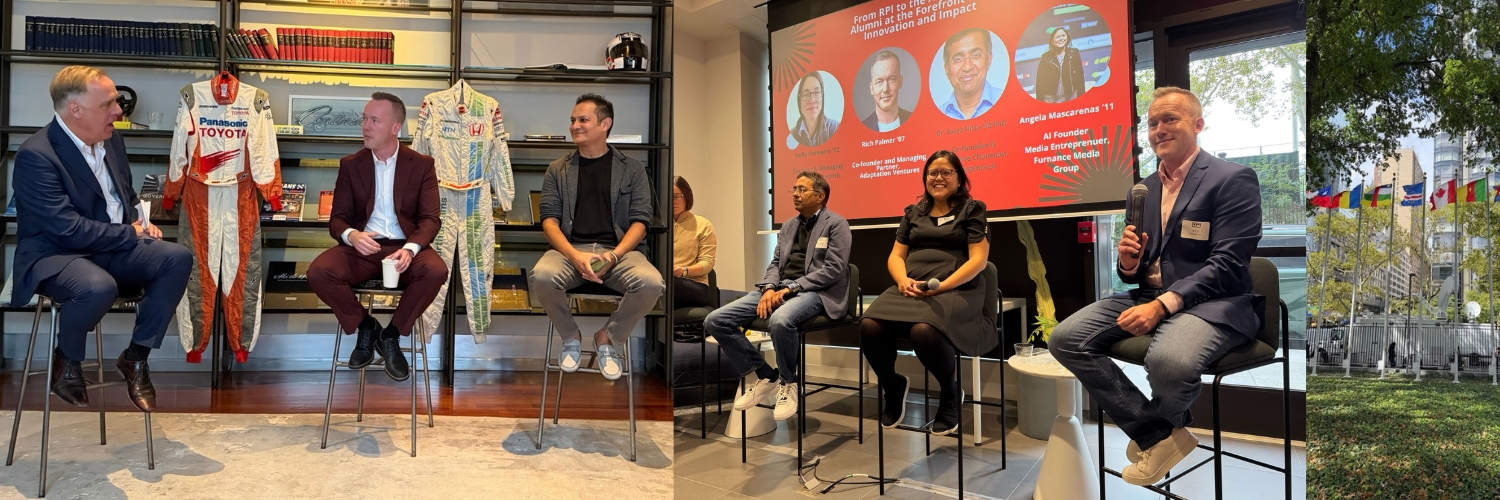
We spent the week of the UN General Assembly in New York, talking about disability with family offices, dignitaries, scientists, clinicians, students, and the public.
At United Nations headquarters, we joined family offices, foundations, heads of state, and world-class entrepreneurs for conversations about where multi-generational wealth goes next. Many of the families in the room are living the sandwich we describe in Nine Years, caring for an aging parent while raising kids, and the question of what happens when a longevity bet lands inside a disability came up more than once.
Separately, Rich sat down with Antonin (Tony) de Fougerolles, Moderna's founding Chief Science Officer, and Sahil Kothari, whose family business spans multiple generations, to talk about AI and health at scale. The conversation kept coming back to one idea: our approach gives investors profit and purpose in the same investment, instead of placing disability in the charity or patient capital bucket where it has usually been kept and floundering.
Rich also joined a panel hosted by Rensselaer Polytechnic Institute (RPI), his alma mater, and Mount Sinai on AI, health, consciousness, and values. A standing-room-only audience of students, researchers, alumni, and investors asked pressing questions about the role of AI in our health systems, in mental health, and in everyday life. We'll share more from that conversation in the coming weeks. Thank you to Rich's fellow panelists and RPI alumni Holly Neiweem, Angela Mascarenas, and Dr. Satya Nitta, and to our RPI colleagues for bringing everyone together.
Looking Ahead to October
October is National Disability Employment Awareness Month, and this year's theme is "Celebrating Value and Talent". Here's what we're watching:
- September 29: BVA holds a glasses distribution in Salt Lake City, with Honolulu (October 9 and 10) and Memphis (October 16) after that (BVA).
- October 1 (New York, NY): The National Organization on Disability's Technology and the Disability Experience at the TimesCenter. SSR 26-2p also takes effect today.
- October 5 to 7 (Arlington, VA): The M-Enabling Summit on digital accessibility and inclusive technology.
- October 9 to 11 (Orlando, FL): Abilities Expo holds its first Orlando show. Admission is free.
- October 13 (virtual): AAPM&R National Grand Rounds on the rehab gap in neurotechnology and building a clinical pathway for brain-computer interfaces.
- October 15: White Cane Safety Day.
- October 20 to 22 (Bloomington, MN): Closing The Gap on assistive technology in special education and rehab, with workshops on the 20th and the main conference on the 21st and 22nd.
- October 21 and 22 (Zagreb, Croatia): ATAAC, Europe's largest professional conference on assistive technology and AAC.
- October 22 (Washington, DC): The Disability Innovation Forum, hosted by Gina Kline, with a startup showcase.
- October 22 and 23 (Toronto, ON): #a11yTO Conf, digital accessibility talks in person and online.
- Later this year: Meta's hearing feature launches in the U.S., and Meta says it will share how developers can get their glasses apps into its new directory. We'll be reading those terms closely.
Thank you for being part of the Adaptation Ventures journey.
Best, The Adaptation Ventures Team
This journal is for informational purposes only, is not a prospectus, may not be relied on as legal, tax, securities or investment advice and does not constitute an offer to buy or sell interests in Adaptation Ventures Fund I (the "Fund").